DETECT
Locate identity, secrets, exact values and linkable facts.
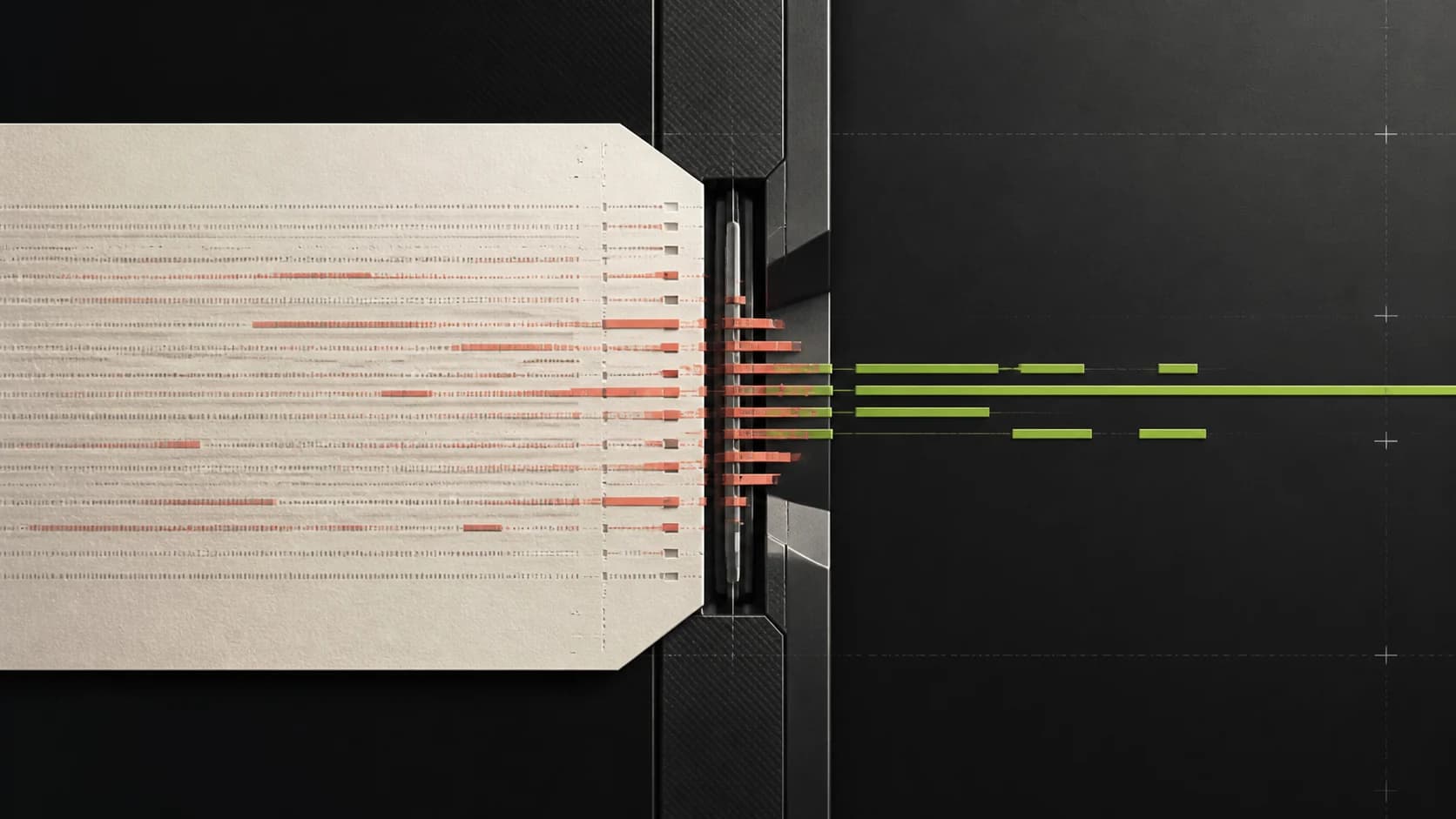
SHREDDAR compiles sensitive documents into the minimum context AI needs before anything leaves your boundary. Share the task. Keep the source.
The browser alpha transforms text locally. Real model execution belongs behind a separately configured, authenticated gateway.
Open a PDF, DOCX or text file. Set a purpose, inspect the protected text, and verify a metadata-only receipt.
OPEN LOCAL WORKBENCH ↗No wallet · No upload · No external model02 / YOUR INFRASTRUCTURESelf-host the gateway before connecting a client or agent. Review authentication, provider routing and retention.
READ THE QUICKSTART →Operator setup required · Not a hosted upload serviceTransform the source, compartmentalize useful meaning, and keep reconstruction within your trusted environment.
 CONTROLLED DESTRUCTION / 01
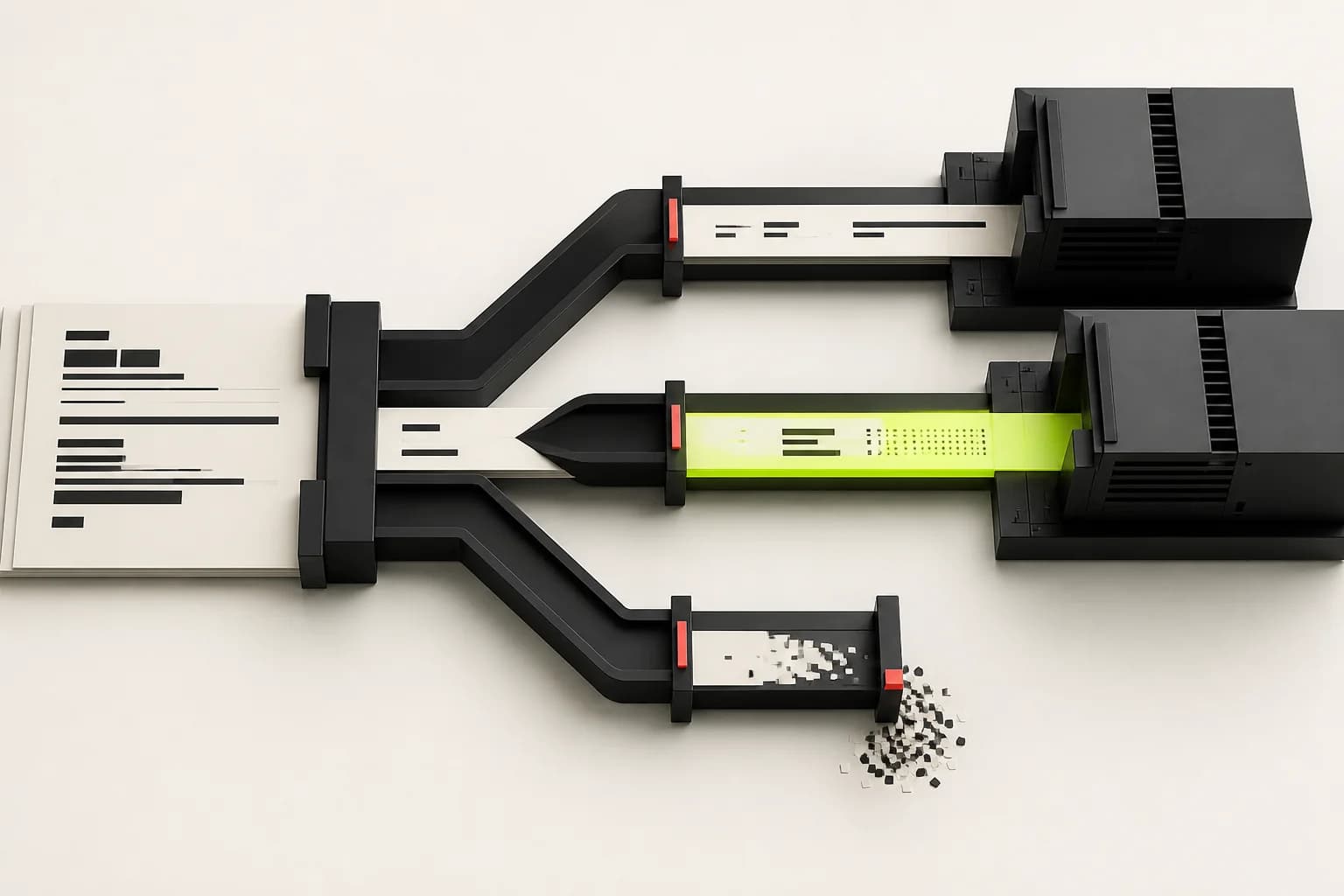 SEMANTIC ROUTING / 02
 TRUSTED BOUNDARY / 03
THE EXPOSURE BOUNDARY
Every model, agent and tool call creates a decision: what actually needs to leave your environment? SHREDDAR makes that decision inspectable and enforceable.
SEE EXACTLY WHAT YOUR AI SEES. Context crosses the line. Identity does not have to.
THE PIPELINE
Locate identity, secrets, exact values and linkable facts.
Remove information the requested task does not require.
Preserve meaning while reducing identifying specificity.
Create independently routable semantic compartments.
Send only policy-approved protected representations.
Reconstruct authorized references inside the local boundary.
LIVE PLAYGROUND
The preview below runs in browser memory. Use synthetic or authorized content—never real credentials. Nothing is sent to our backend.
Scanning locally…
Waiting for protected context…
Waiting for authorized reconstruction…
THE PRIVACY COMPILER
Detection is a component. The product is the decision over relevance, precision, linkability and the minimum useful representation.
PRIVACY RECEIPTS
Every protected operation records policy, provider, transformations, exposure reduction and a verifiable hash—without recording the prompt or mapping.
EXAMPLE ONLY — NOT VERIFIED EVIDENCEAll counts, token totals, risk labels, identifiers and hash fragments below are invented to explain the receipt format. No user document was processed and no provider was called.
sha256:EXAMPLE_NOT_A_HASHReal receipts contain transformation metadata only—not prompts, identities or Vault mappings. Generate and verify your own receipt in the local Workbench.
OPENAI-COMPATIBLE GATEWAY
Self-host SHREDDAR inside your boundary, point an OpenAI-compatible client at it, and inspect a Privacy Receipt on every response.
# run inside your trusted boundary
export OPENAI_BASE_URL=http://127.0.0.1:8787/v1

# your existing client
client.chat.completions.create(
  model="configured-upstream",
  messages=[...],
  shreddar_task="Review obligations"
)AGENT-NATIVE INTEGRATIONS
Use the tested MCP server and one portable privacy skill with OpenClaw, Hermes Agent, OpenAI Codex, Claude Code, or another compatible host.
Paste or open authorized text, define the task, and inspect the exact protected output before using it elsewhere.
Run SHREDDAR inside your infrastructure and point existing OpenAI-compatible clients at one controlled endpoint.
Expose only five agent-safe tools, keep reconstruction outside model context, and attach a Privacy Receipt to every completed operation.
PRODUCT STRATEGY
SHREDDAR is being built as a fast privacy layer before expensive or external intelligence: prepare locally, divide deliberately, and pay only for useful output.
A compact local model is the planned fast path for conceptualizing ordinary text and documents inside the trusted boundary. That is useful for legal review, e-discovery, diligence, investigations, and other document-heavy work.
DETERMINISTIC ALPHA LIVE / LOCAL MODEL PLANNEDPolicy can turn a source into non-overlapping conceptual packages and route each compartment to a different model. Local synthesis recombines results so no single configured provider is intended to receive the full document.
EXPOSURE REDUCTION / NOT CRYPTOGRAPHIC SECRECYConceptualization removes irrelevant wording and identifying precision while preserving task meaning. A shorter protected representation can reduce input tokens, latency, and model cost; each receipt will measure the actual reduction.
SAVINGS VARY BY DOCUMENT, POLICY + TASKSHREDDAR maps to data minimization, privacy by design, traceability, and risk-management principles in current US guidance and EU law. It is designed to help teams build compliant workflows—not to certify one automatically. Jurisdiction, sector, lawful basis, provider terms, retention, human oversight, and use-case risk still require deployment-specific review.
No secrets in prompts. No arbitrary Vault lookup. No raw-content telemetry. Returned output is inspected before local reconstruction.
READ THE THREAT MODEL →Strict PAYG only: every completed operation is metered by input-context tokens, so larger requests cost more. Pricing and x402 settlement stay held until the rate and route are verified.
EXPLORE PRODUCT + TOKEN UTILITY →PRIVATE INFORMATION STAYS PRIVATE.
USEFUL MEANING CAN TRAVEL.